
Invited Speakers
 |
Prof. Saeid Alikhani Department of Mathematics, Yazd University, Yazd, Iran Majority Distinguishing Colorings of Graphs We study graph colorings that simultaneously satisfy two constraints: the majority condition and the distinguishing property. A majority coloring requires that, at each vertex, no color appears on more than half of the adjacent vertices or incident edges, while a distinguishing coloring breaks all nontrivial automorphisms of the graph. Motivated by recent work on majority distinguishing edge colorings, we introduce and formalize the concept of majority distinguishing vertex colorings.
|
 |
Prof. Mikhail Y. Kovalyov United Institute of Informatics Problems, National Academy of Sciences of Belarus, Minsk, Belarus Routing and Charging Scheduling for Regular Electric Buses This work is inspired by the results of the project ‘‘Planning Process and Tool for Step-by-Step Conversion of the Conventional or Mixed Bus Fleet to a 100% Electric Bus Fleet’’ of the Electric Mobility Europe initiative. The public transport operators involved in this project faced the challenge of effectively routing and charging electric buses operating on a fixed timetable. They have all the data to make appropriate decisions. Currently, decisions are made primarily based on previous routing schemes and the "first come, first charged" principle.
|
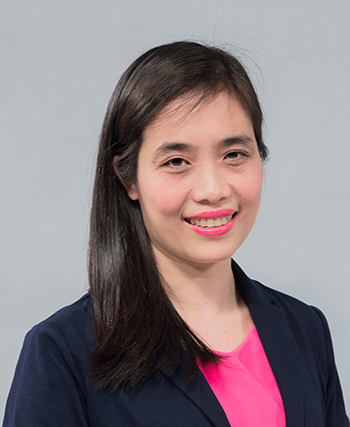 |
Prof. Huỳnh Thị Thanh Bình School of Information and Communication Technology (SoICT), Hanoi University of Science and Technology (HUST), Hanoi, Vietnam Evolutionary Multitasking: Recent Advances and Applications Evolutionary multitasking optimization is a cutting-edge topic in the field of computational intelligence that merges evolutionary computation and multitasking methodologies to address multiple optimization problems concurrently. By leveraging the interactions and dependencies between problems, evolutionary multitasking allows for the sharing and transfer of valuable information between tasks, thereby enhancing the overall search performance. This talk will provide an overview of the fundamental concepts, principles, and recent advancements of evolutionary multitasking optimization. Additionally, the talk will highlight the practical significance of evolutionary multitasking algorithms and demonstrate how these techniques can effectively tackle complex real-world optimization problems. Through these problems, the talk will delve into algorithm design issues such as solution encoding and the knowledge transfer mechanism in the multitasking environment. Performance evaluations on benchmark datasets will also be presented to demonstrate the effectiveness of evolutionary multitasking algorithms.
|
 |
Prof. Zhi-Quan (Tom) Luo The Chinese University of Hong Kong, Shenzhen, China On the Principles Behind Neural Network Optimizers Stable and efficient optimizers are crucial for Neural Network (NN) training. However, current NN optimizers are built on a surprisingly fragile foundation. Notably, some are claimed to diverge even on simple examples. Further, when deployed, often regardless of the risk, their empirical behavior on modern LLMs falls out of the scope of existing theory and thus remains hard to predict. All these cause substantial uncertainty and concern for their deployment in practical AI systems. In this talk, we will introduce recent advances on the theoretical grounding and principled foundation behind current NN optimizers. We will ask the following questions. First, does Adam diverge or converge? If it can converge, how to choose hyperparameters to avoid divergence? Second, Why is Muon > Adam > SGD on LLMs? What special structure in Hessian drives the gap? Third, how to utilize the structure to design future optimizers? We will introduce our initial results and discuss the recent advances in the community.
|
 |
Prof. Mikhail A. Marchenko Artificial Intelligence and Information Technology Laboratory, Institute of Computational Mathematics and Mathematical Geophysics SB RAS, Novosibirsk, Russia Parallelization of statistical modeling methods The talk will focus on methods of parallelization of statistical modeling algorithms. The main emphasis is placed on the problems of statistical modeling of kinetic processes, what is due to their practical significance. An important area touched upon in the talk is the optimization of parallel statistical modeling algorithms in order to reduce their computational complexity.
|
 |
Prof. Elena V. Konstantinova Sobolev Institute of Mathematics SB RAS, Novosibirsk, Russia CayleyPy project: artificial intelligence methods for Cayley graphs In this talk we review some new results obtained by using AI methods to check open problems in Cayley graph theory and to state new conjectures. The results discussed in the talk are published in [1]. This is the third paper of the CayleyPy project, https://github.com/CayleyPy/CayleyPy, applying artificial intelligence methods to problems in group theory. This is the first paper where the public release of CayleyPy is announced. CayleyPy is an open–source Python library for computations with Cayley and Schreier graphs. Compared with state-of-the-art systems based on classical methods, such as GAP and Sage, CayleyPy handles significantly larger graphs and performs several orders of magnitude faster. For many Cayley graphs over the symmetric group Symn quasi–polynomial diameter formulas are observed: a small set of quadratic or linear polynomials on n, and it is conjectured that it is a general phenomenon. These lead to efficient diameter computation, despite the problem being NP-hard in general. A refinement of the Babai-type conjecture on diameters of Symn is proposed as follows: 1/2n2 + 4n upper bounds for the diameters in the standard undirected case, as compared to prior conjectural bounds of O(n2). Explicit generator families, related to involutions in a simple “square-with-whiskers” pattern, are conjectured to maximize the diameter; extensive search confirms this for all n ⩽ 15. Some of conjectures are “LLM-friendly” — they can be stated as sorting problems, which are easy to formulate for LLM, and their solutions can be given by an algorithm or by a Python code, which is easy to verify, so they can be used to test LLM’s abilities to solve research problems. To benchmark various methods of path-finding on Cayley graphs more than 10 benchmark datasets were created in the form of Kaggle challenges, making benchmarking easy and public to the community. CayleyPy works with arbitrary permutation or matrix groups, and supports a pre-defined collection of more than a hundred generators including puzzle groups. The code for direct growth computation outperforms similar functions on the standard computer algebra system GAP/SAGE up to 1000 times both in speed and in maximum sizes of the graphs that it can handle.
[1] A. Chervov, D. Fedoriaka, E. Konstantinova, and et al., CayleyPy Growth: Efficient growth computations and hundreds of new conjectures on Cayley graphs (Brief version), arXiv, 2025, https://doi.org/10.48550/arXiv.2509.19162. |
Tutorials
 |
Prof. Alexander Strekalovskiy Matrosov Institute for System Dynamics and Control Theory SB RAS, Irkutsk, Russia New Principles of Nonconvex Optimization We address the nonconvex optimization problem with the cost function, equality and inequality constraints given by DC functions (difference of two convex functions).
|
 |
Prof. Anton Eremeev Novosibirsk State University Expected runtime analysis of evolutionary algorithms The theory of runtime analysis of the evolutionary algorithms, including genetic algorithms, has been developed during the last three decades, starting with the works of Ingo Wegener and his co-authors. This theory allows to obtain provable mathematical results that give some guarantees on the expected computational cost till first hitting an optimal solution by the EA population (expected runtime), or to show the inefficiency of some EAs for some parameter settings. This tutorial surveys some recent techniques that proved to be useful in runtime analysis of EAs and discusses the open problems in the area.
|
 |
Prof. Alexey Chernov LLC «Quantum Algorithms And Optimization» Dolgoprudny, Russia The universal solver QORETEX (Orsima). What has changed over the past year The report will briefly describe the innovations in the solver over the past year, the successes and difficulties that arose. In particular, the following topics will be covered:
|
Round table discussion «Industrial Applications»
|
|
Alexander Veremyev AI Consultant & Independent Researcher From Text Analytics to AI Agents: How LLMs Are Reshaping Work, Research, and Reality This presentation provides an overview of modern Large Language Model (LLM) capabilities. Over the past decade, LLMs have rapidly evolved from early natural language processing methods to today's AI agents capable of executing complex, multi-step workflows with minimal human intervention. They transitioned from simple question-answering chatbots into the central cognitive engines, or "brains," of autonomous systems. This transformation has also given rise to the era of "vibe coding," fundamentally reshaping how software is designed, developed, and programmed.
|
|
|
Alexander Maximenko LRI Optic Lab, Moscow, Russia GPUs for Combinatorial Optimization: Opportunities, Limits, and Practical Experience Recent advances in GPU hardware and machine learning have renewed interest in using GPUs for combinatorial optimization (CO). While GPUs have transformed areas driven by linear algebra and large-scale learning, their role in CO remains more nuanced. Where do GPUs already deliver real benefits, and where do architectural constraints still limit their impact? This round table will bring these questions to the forefront through an open discussion with experts. We invite participants to share not only successful results, but also negative findings, engineering obstacles, and lessons learned from trying to map combinatorial algorithms to massively parallel hardware. A central goal of the discussion is to focus on what really matters in practice: end-to-end performance, solution quality over time, memory and communication bottlenecks, and the realities of implementation and deployment. When do hybrid CPU+GPU designs make sense? Which problem classes are truly GPU-friendly? We hope for a lively, candid, and experience-based discussion that helps clarify where the field stands today and where it may be heading next. |