LECTURERS
|
|
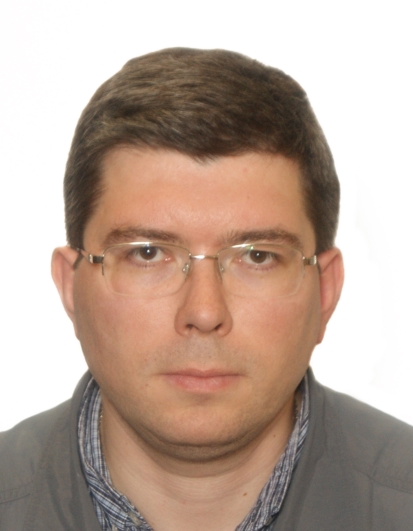
Shaposhnikov Stanislav Moscow State University, Moscow, Russia «Fokker-Planck-Kolmogorov Equations: Changes of Coordinates»
Fokker-Planck-Kolmogorov equations play a key role in the investigation of diffusion processes. Transition probabilities and stationary distributions of diffusion processes are solutions of the equations. In the case of irregular coefficients it allows to study qualitative properties of transition probabilities and stationary distributions, to construct a diffusion process, and to obtain results of diffusion process’s uniqueness. Latest achievements of the theory of Fokker-Planck-Kolmogorov equations relate to a usage of few nontrivial changes of coordinates, such as: Zvonkin's transform, the method of doubling variables, and different methods of the renormalization of solutions. In the lecture course we consider these transforms and give recent results, which are obtained with their help. |
|
|
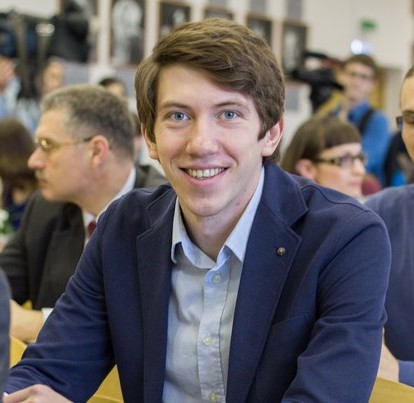
Gomoyunov Mikhail Krasovskii Institute of Mathematics and Mechanics UB RAS, Yekaterinburg, Russia «Minimax and Viscosity Solutions of Path-Dependent Hamilton-Jacobi Equations» In the lecture course, recent results from the theory of minimax and viscosity (generalized) solutions of path-dependent Hamilton-Jacobi equations with coinvariant derivatives over the space of continuous functions will be presented. Equations of this type arise in dynamical optimization problems for time-delay systems. The first lection will cover classical results from the theory of minimax and viscosity solutions of Hamilton-Jacobi equations with first-order partial derivatives. In the second lection, we will see how these results are generalized to the (infinite-dimensional) case of path-dependent Hamilton-Jacobi equations. |
|
|
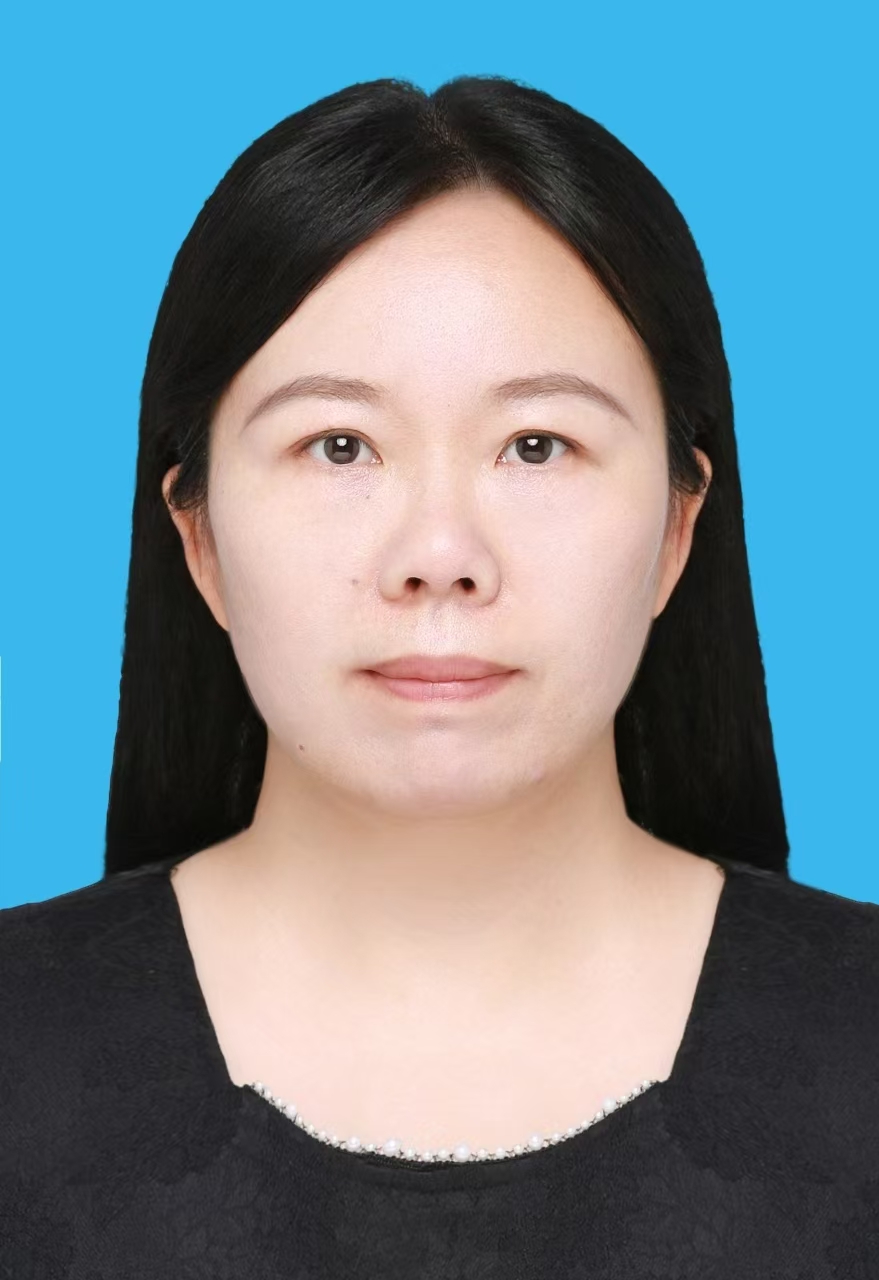
Hu Guang-Da Department of Mathematics, Shanghai University, Shanghai, China «Difference Stabilizing Controller of Linear Delay Systems» This lecture course investigates stabilization of linear delay systems. A difference stabilizing controller is designed for linear delay systems. The first lecture covers stability criteria which includes frequency-domain and time-domain methods. The second lecture involves design of the difference stabilizing controller which includes existence of the difference stabilizing controller and designing methods of the controller. Both theoretical results and numerical algorithms are provided. Several numerical examples are given to illustrate the theoretical results and the numerical algorithms.
|
|
|
Li Shuguang School of Science, Dalian Maritime University, Dalian, China «Higher-Order Compact Difference Methods for Nonlinear Dispersive Wave Equations» In the lecture course, the design method and numerical analysis theory of the compact finite difference method for several types of nonlinear dispersive wave equations are introduced. In the first lecture, the theoretical analysis of the compact numerical schemes is introduced, including discrete conservation, solvability, and prior estimation. In the second lecture, the convergence and stability of compact schemes are introduced, numerical programming is discussed, and the theoretical analysis is verified through numerical experiments. |
|
|
Liang Hui School of Science, Harbin Institute of Technology, Shenzhen, China «Compatibility of Collocation Error Analyses for Volterra Integral Equations with Smooth and Weakly Singular Kernels» The numerical solution by piecewise polynomial collocation and iterated collocation of Volterra integral equations (VIEs) of the second kind has been extensively studied and apparently sharp convergence results are known for the cases of a smooth kernel $K(t,s)$ and a weakly singular kernel $(t-s)^{-\alpha}K(t,s)$, where $\alpha\in (0,1)$ is a parameter. If one takes the formal limit as $\alpha\to 0$, then the weakly singular VIE reduces to the smooth VIE, but the known collocation error bounds for the weakly singular VIE do not become the collocation error bounds for the smooth VIE - the error bounds for the smooth VIE are typically of a higher order. In the lecture course, this anomaly is explained and new sharper collocation and iterated collocation error bounds are derived for the weakly singular VIE that blend exactly as $\alpha\to 0$ with known error bounds for the smooth VIE. This analysis is substantially different from previous VIE collocation analyses, e.g., it constructs a remarkable new decomposition of the solution of the weakly singular VIE, it investigates in detail the dependence on $\alpha$ of the matrices associated with collocation, it establishes a new Gronwall inequality. |
|
|
Kolokoltsov Vassili Moscow State University, Moscow, Russia «Intrinsic derivatives, interacting particles and the propagation of chaos» Intrinsic derivatives are systematically used to derive the limiting kinetic equations describing the propagation of chaos property for Markovian systems of interacting particles. Moreover, they are key quantities to the estimate of convergence rates for the corresponding dynamic law of large numbers and the dynamic central limit theorem. This will be exemplified on the famous models of the Smoluchovski coagulation equation and the Boltzmann collision dynamics. Further development includes models with memories that are presented by fractional kinetic equations with variable fractional order. |